“Art creates a profound connection between the artist and the audience. Through that connection, both can heal.”
Rick Rubin
Art is much more than just an aesthetic experience. It is a subtle communication tool that allows us to express what words often cannot – whether it is indescribable emotions, profound experiences, or abstract ideas. Today, it is widely recognized that artistic expression can convey an individual's inner world in a way that is authentic, healing, and natural.
This is precisely why art is becoming an integral part of healthcare, helping people of all ages explore and process emotions, reduce stress and anxiety, and contribute to overall mental well-being.
Art as Medicine: How the Visual Environment Affects Health
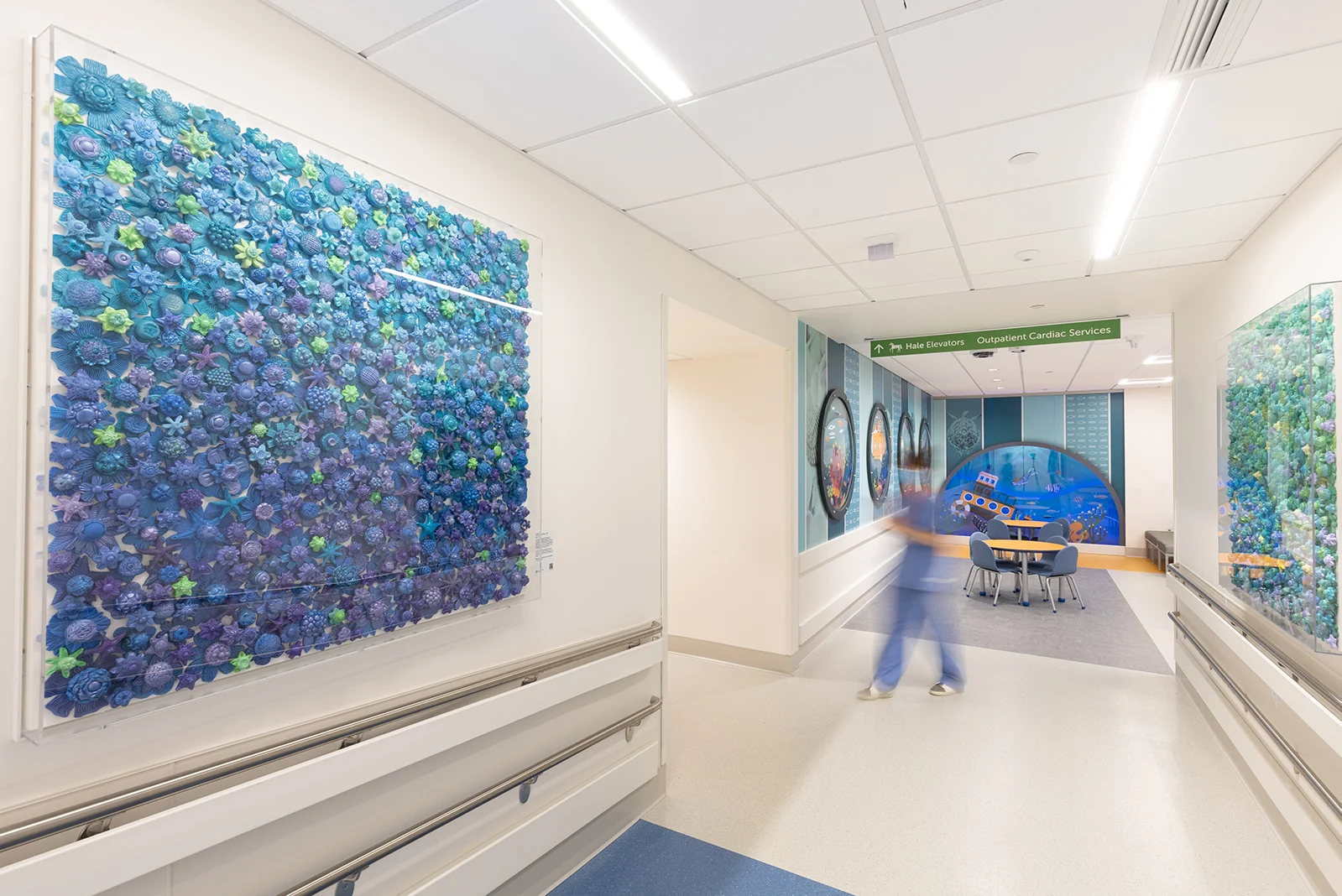
In recent years, there has been a growing awareness that the physical environment we move through has a fundamental impact on our health, psychological well-being, and overall quality of life. This trend is also evident in healthcare – and select studies confirm that hospital environments play an important role in the healing process and should be understood as an integral part of quality medical care. One of the key elements with a positive impact on both patients and medical staff is art.
According to a study published by the Center for Health Design, we know that as early as 2008, nearly 50% of US hospitals had programs focused on active engagement with art. The primary reason for their implementation was the demonstrable benefits for patients – particularly in the areas of mental and emotional recovery, as confirmed by nearly 79% of surveyed facilities. An interesting finding is that more than half of the surveyed hospitals also noted a positive impact of art on their employees. Specifically, this involved a noticeable reduction in stress, which serves as a prevention against burnout – one of the most pressing challenges in modern healthcare.
Similar findings were brought by a 2017 case study conducted at Copenhagen University Hospital. It confirmed that thoughtfully chosen visual art significantly increases patient satisfaction with their stay and the overall quality of their experience. Artworks create an environment where people feel more connected to their surroundings and to themselves. They facilitate social interactions and enhance feelings of calm and security.
Although these findings primarily apply to the hospital environment, their transferability is broader. Art can play a similarly positive role in other types of spaces where people face demanding situations – for example, in offices. Visual culture and an aesthetic environment are not just "nice additions," but an investment in mental health, motivation, creativity, and ultimately, productivity.
Art as Part of Medical Care
This approach is slowly beginning to appear in Europe as well. In Neuchâtel, Switzerland, a pilot program is currently underway in which doctors prescribe visits to museums, galleries, and other art spaces as a form of treatment support. The inspiration came from the Canadian city of Montreal, where this program has been running since 2018 and has shown positive results.
Physical activity, which cultural institutions naturally encourage, is also part of the treatment. Both patients and doctors have responded very positively to this element of care. "Museum prescriptions" are most commonly used in the treatment of anxiety, stress, and lack of physical activity – acting as a prevention against more serious forms of mental illness, such as depression.
Another successful example of supplementing medical care with an artistic element is BioTexCom, an IVF center in Barcelona where guitar concerts are played to freshly fertilized embryos. According to their data, live music has a positive impact on embryo development. The vibrations and sounds of musical instruments can increase their quality during IVF, thereby raising the chance of a successful pregnancy. The study shows that embryonic development can speed up by approximately 5% thanks to music. Given that the success rate of IVF on the first attempt is lower than 50%, experts consider every factor that can have even a relatively small positive impact.
Living with Art: An Extra Eight Billion Pounds
Truly astounding are the conclusions of recent research by the UK Department for Culture, Media and Sport entitled Monetising The Impact Of Culture And Heritage On Health And Wellbeing. Conducted in cooperation with Frontier Economics and the World Health Organization (WHO), the research found that participation in cultural activities has a significant positive impact on physical and mental health. Through complex mathematical models, the study estimates that both active creative engagement and passive art consumption bring an annual benefit of £8 billion to British society – primarily in the form of improved well-being, the prevention of mental illness, and increased population productivity.
For example, seniors over 65 who participated in regular weekly drawing classes for three months experienced an average financial benefit in preventive savings of about £1,300 – thanks to a reduced need for general practitioner visits and an improved sense of well-being. Similarly, young adults aged 18 to 28 who regularly participated in art, music, or theatrical activities reported higher levels of happiness and a sense of purpose. The dividend in terms of mental well-being and higher productivity was valued at £750.
Regular visits to cultural events, art exhibitions, concerts, or active creative engagement – such as art classes for children or choir singing for seniors – offer benefits that go far beyond financial dividends. These range from the need for self-actualization, the building of personal identity and self-worth, and experiencing well-being, to community building, cultural identity, and the strengthening of interpersonal relationships and social cohesion.
Art is priceless.
Author: Thérèse Ahossey, Content Hero